
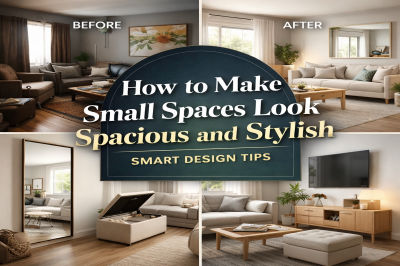
How to Make Small Spaces Look Spacious and Stylish

Admin
Blog AuthorSmall room? Tiny apartment? Awkward layout that makes you question your life choices every time you walk in? Relax. I’ve worked with rooms so small I could touch both walls at once (not kidding), and I promise you this: you don’t need more square footage — you need smarter design.
Today, I’ll show you how to make small spaces look spacious and stylish without knocking down walls or spending a fortune. Ready to make your space feel twice as big? Let’s go.
Start with a Clear Vision (Before You Buy Anything)
Before you move furniture around like you’re solving a puzzle, pause.
Ask yourself:
What feels cramped right now?
Is the room dark?
Does furniture block natural light?
Do I own too much stuff? (Be honest.)
When I redesigned my tiny guest room, I didn’t buy new furniture first. I edited the clutter. That alone made the room feel 20% bigger. Sometimes the problem isn’t space — it’s excess.
How to Make Small Spaces Look Spacious and Stylish Without Major Renovation
You don’t need construction. You need strategy.
1. Declutter Ruthlessly
I know. It’s boring advice. But it works.
Keep:
Functional furniture
Decorative pieces you actually love
Items that serve more than one purpose
Remove:
Random decor you forgot about
Bulky pieces that block pathways
Oversized rugs
Negative space creates breathing room. Ever walked into a minimalist hotel room and instantly relaxed? That’s intentional spacing at work.
How to Make Small Room Look Bigger with Paint
Paint might be your cheapest design weapon.
Choose Light, Reflective Colors
If you want to know how to make small room look bigger with paint, start here:
Soft whites
Warm beige
Pale gray
Light pastels
Light colors reflect natural light instead of absorbing it. Dark walls can look dramatic, but they shrink small rooms fast.
Try One Clever Trick
Paint your ceiling one shade lighter than your walls.
That tiny shift visually lifts the room. I tried this in a small office, and the ceiling suddenly felt higher. Magic? No. Just smart contrast.
How to Make a Small Room Look Bigger with Mirrors
Mirrors don’t just reflect your outfit. They expand space visually.
If you want to master how to make a small room look bigger with mirrors, follow this rule: place them strategically.
Best Mirror Placements
Opposite a window
Behind a light source
Along narrow hallways
Above a console table
Mirrors double light and depth instantly. Ever noticed how restaurants use mirrors to make tight seating feel open? Designers know exactly what they’re doing.
Just don’t overdo it. You don’t want your living room to feel like a dance studio.
How to Make a Small Room Look Bigger with Furniture
Furniture either saves you or sabotages you.
Choose the Right Scale
If you’re wondering how to make a small room look bigger with furniture, focus on scale and proportion.
Pick slim-leg sofas instead of bulky bases
Choose raised furniture that shows floor space
Use nesting tables instead of oversized coffee tables
Select armless chairs to reduce visual weight
When you see floor beneath furniture, the room feels lighter. I swapped a chunky couch for one with visible legs, and suddenly the room breathed.
Multi-Functional Pieces Win
Small spaces love smart furniture.
Look for:
Storage ottomans
Foldable desks
Wall-mounted shelves
Beds with drawers
Every piece should work overtime. Why waste space on single-purpose items?
How to Make a Small Living Room Look Bigger and Brighter
Living rooms carry the most pressure. You relax there, entertain there, scroll endlessly there. So let’s fix it.
Maximize Natural Light
Keep window treatments light and airy.
Sheer curtains
Light linen panels
No heavy drapes
Block less light, gain more brightness.
Use a Cohesive Color Palette
Too many colors fragment small spaces.
Stick to:
2–3 main tones
Repeated materials
Consistent textures
If you want to know how to make a small living room look bigger and brighter, simplify the visual noise.
Add Vertical Elements
Tall bookshelves. Vertical art. Long curtains.
When you draw the eye upward, the room feels taller. Ever walked into a room and felt like it stretched higher than it actually did? That’s vertical styling.
How to Make a Small Bedroom Look Bigger
Bedrooms should feel calm, not cramped.
If you’re researching how to make a small bedroom look bigger, focus on these design moves:
1. Keep the Bed Low-Profile
Low platform beds create height illusion.
Tall, bulky bed frames shrink vertical space. Go sleek instead.
2. Use Wall-Mounted Lighting
Skip bulky bedside lamps.
Install:
Wall sconces
Hanging pendants
Slim table lamps
Free up surface space. The room instantly feels cleaner.
3. Limit Decorative Clutter
You don’t need 12 throw pillows. Trust me.
Keep bedding simple:
Neutral base
One accent color
Layered textures
The bedroom should feel airy, not overstyled.
How to Make a Small Room Look Bigger Before and After
Want dramatic transformation? Let’s talk before and after strategy.
Before
Dark paint
Heavy curtains
Oversized furniture
Too many small decor pieces
After
Light reflective walls
Sheer window treatments
Slim, raised furniture
Intentional decor
I’ve seen tiny apartments transform completely with just these swaps. No renovation. No demolition. Just smart edits.
Ever compared photos side-by-side? The difference feels shocking.
How to Make Small Spaces Look Spacious and Stylish Pakistan
Let’s talk local context.
If you’re researching how to make small spaces look spacious and stylish Pakistan, climate and layout matter.
Many homes in Pakistan face:
Compact urban layouts
Strong natural sunlight
Warm temperatures
Lighting Changes Everything
Lighting determines mood and space perception.
Layer Your Lighting
Don’t rely on one ceiling bulb.
Use:
Ambient lighting (ceiling fixtures)
Task lighting (desk or reading lamps)
Accent lighting (LED strips or wall lights)
Layered lighting eliminates dark corners. Dark corners shrink rooms. Bright corners expand them.
Simple.
Rugs: Size Matters More Than You Think
Too-small rugs make rooms feel fragmented.
Choose:
A rug large enough to anchor furniture
Light or neutral patterns
Minimal contrast
A properly sized rug visually connects furniture pieces. The room looks unified instead of scattered.
Keep Pathways Clear
Flow matters.
You should walk through a room without zigzagging like you’re navigating obstacles. Clear pathways make rooms feel open.
Try this:
Leave at least 24–30 inches for walkways
Push furniture slightly away from walls if possible
Avoid blocking entry points
Open movement equals open feeling.
Final Thoughts: Small Space, Big Style
Here’s the truth: you don’t need a bigger home to feel comfortable. You need smart choices.